From Detailed Designs to Finished Metal Components
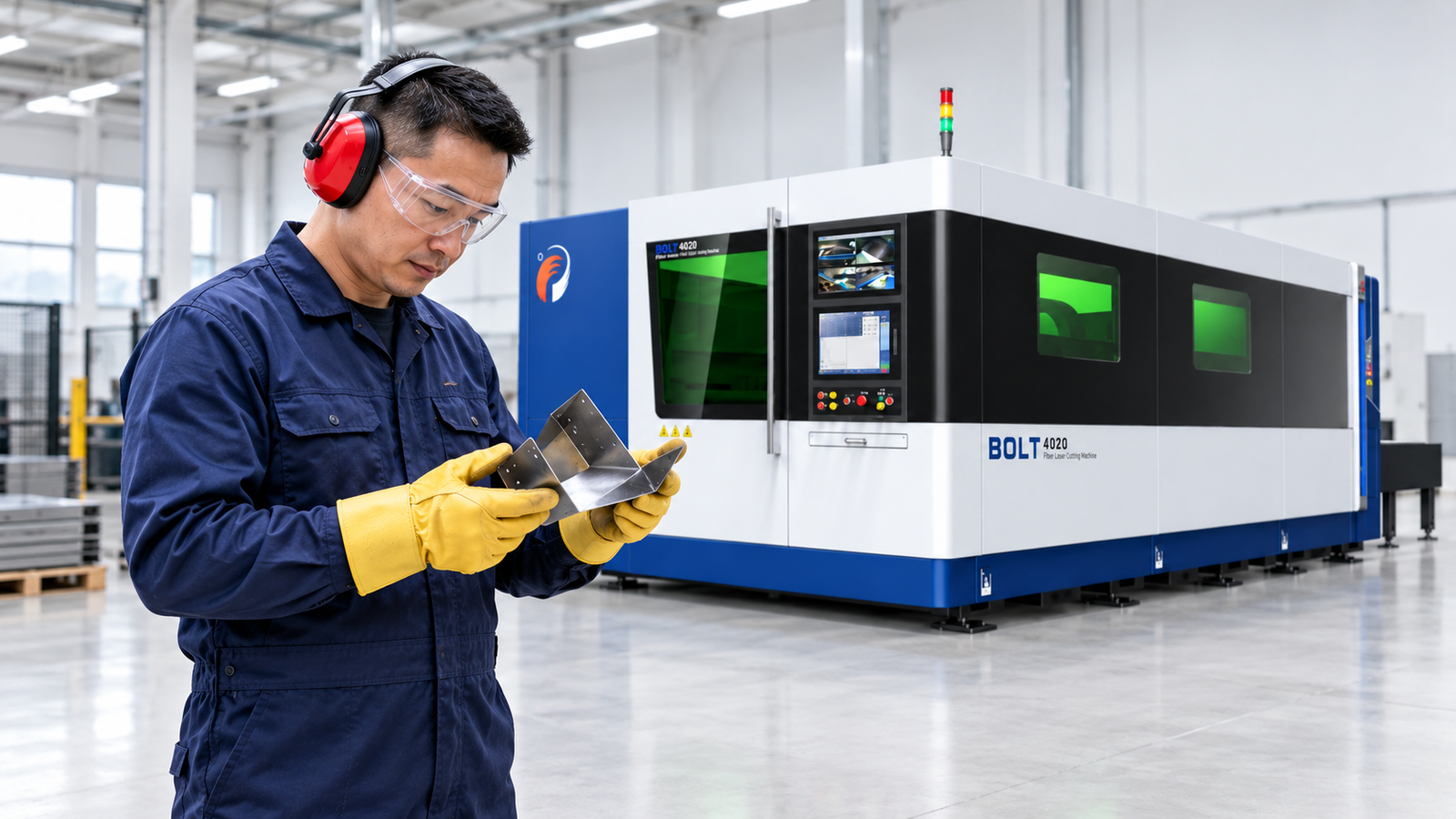
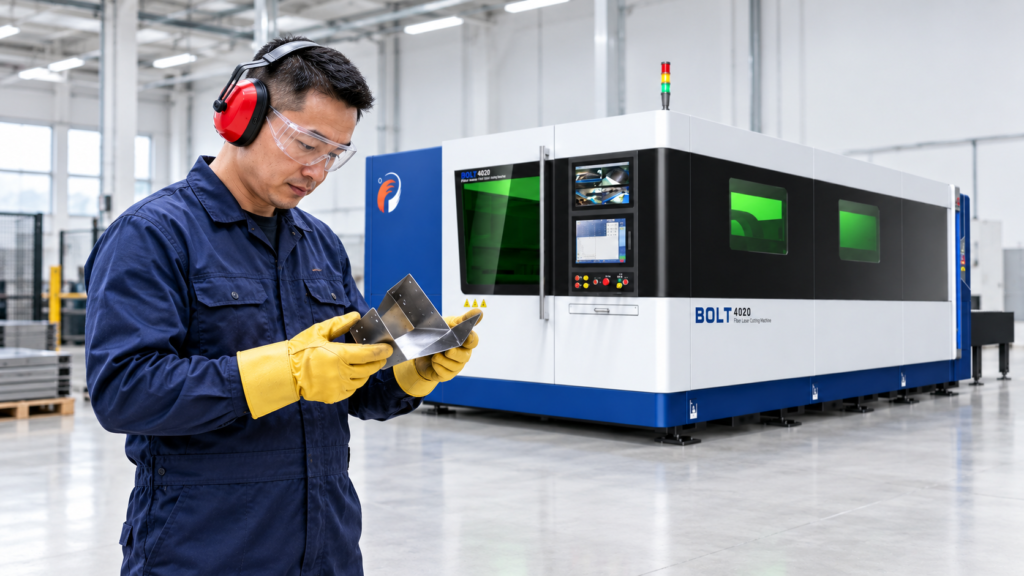
Metal fabrication brings together machine processing and hands-on workmanship to turn sheet metal into functional components. The image captures this connection: an enclosed laser cutting machine stands behind a technician inspecting a formed metal part, highlighting both the production process and attention to the finished result.
Detailed Cutting for Functional Designs
Laser cutting creates the outlines, holes, slots, and profiles required for sheet metal components. These features form the foundation for subsequent fabrication stages, allowing individual parts to be prepared for bending, joining, or assembly.
From simple mounting plates to more complex component profiles, each design begins with clearly defined drawings and material requirements.
Forming Metal into Practical Components
After cutting, flat metal blanks can be bent into brackets, channels, covers, and enclosures. The folded component shown in the image illustrates how several surfaces and mounting holes can be combined within a single fabricated part.
Coordinating the cut profile with the intended bends helps ensure that the component fits its purpose and connects correctly with adjoining parts.
Attention to the Finished Part
Visual inspection is an important stage in reviewing fabricated components. Examining the formed shape, surface condition, edges, and hole positions can help identify visible issues before further processing or assembly.
Where a project requires dimensional accuracy, visual checks should be supported by suitable measuring tools and checks against the approved drawing.
Applications Across Different Projects
Laser-cut and formed sheet metal components can be used in machinery, equipment housings, mounting systems, architectural metalwork, and general engineering assemblies. Material selection, thickness, finish, and fabrication methods depend on the component’s intended function and operating environment.
Planning for Production
A clear production brief helps translate a design into a practical finished part. Key details include material specifications, dimensions, bend requirements, hole locations, surface finishes, and order quantities. Confirming these requirements before fabrication supports a more coordinated production process.